
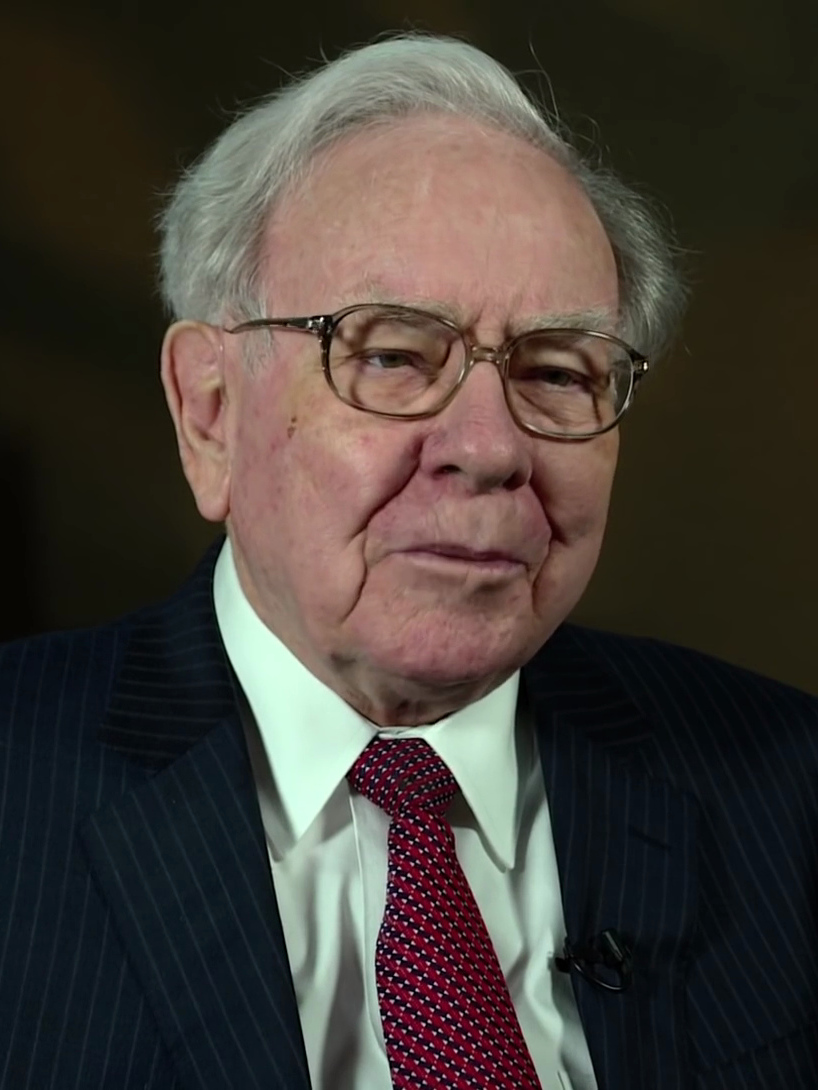
In the swirling chaos of 2026’s markets—with AI hype, geopolitical tension, and financial media noise—one piece of advice remains a beacon of clarity. It’s not from a new-age finfluencer; it’s from a 95-year-old who has seen it all: Warren Buffett.
For years, the “Oracle of Omaha” has distilled his life’s work into a stunningly simple directive for the average investor. It’s the advice he gave in his 2013 shareholder letter and has since reiterated: the strategy he himself has instructed the trustee of his estate to use for his wife’s inheritance. For the individual investor in 2026, facing uncertainty, this isn’t just philosophy. It’s a practical, all-weather action plan.
Here is the single index fund Warren Buffett recommends, why it’s more relevant than ever for 2026, and the exact, no-nonsense way to implement it.
Buffett’s Crystal Clear Directive: The “90/10” Rule for Simplicity
First, let’s clarify Buffett’s famous recommendation, often paraphrased and misunderstood. The core of his advice is two-fold:
- For the overwhelming majority of investors who do not wish to actively manage their portfolios: “My regular recommendation has been a low-cost S&P 500 index fund.” He has specifically named Vanguard’s S&P 500 Index Fund as the gold standard.
- For the trustee of his wife’s inheritance: In his 2013 letter, he outlined a specific plan: Put 90% of the cash in a low-cost S&P 500 index fund and 10% in short-term government bonds.
The message is unambiguous. In a world of 10,000+ ETFs and complex strategies, Buffett is pointing to one simple, timeless vehicle.
The Single Fund: Vanguard S&P 500 ETF (VOO)
While there are several S&P 500 index funds (like IVV from iShares or SPY from SPDR), Buffett has explicitly cited Vanguard due to its unique client-owned structure, which relentlessly drives down costs. The fund to focus on is:
Vanguard S&P 500 ETF (Ticker: VOO).
- Expense Ratio: 0.03% (That’s $3 per year for every $10,000 invested).
- What It Holds: 500 of the largest, most established U.S. companies, weighted by market value.
- Why This, Not the “Total Market”? The S&P 500 is a “best-in-class” committee-selected index of profitable, viable companies. It covers over 80% of the U.S. stock market’s total value. For Buffett, capturing the performance of America’s leading businesses is the goal, and the S&P 500 does that with ruthless efficiency.
Why This Advice is a Masterstroke for the 2026 Investor
This might seem overly simple. But in the context of 2026’s challenges, its brilliance is amplified.
1. It Neutralizes “Analysis Paralysis.”
With predictions about AI winners, the future of rates, and sector rotations dominating headlines, new investors freeze. Buffett’s advice cuts through it: You don’t need to know. By owning VOO, you own a slice of every major player—from tech giants to healthcare leaders to financial institutions—without betting on a single one. If the U.S. economy grows over time, you participate.
2. It’s an “Anti-Bubble” Strategy.
The S&P 500’s market-cap weighting is self-cleansing. When a sector or company becomes overvalued and bloated, its weight in the index grows. When it eventually corrects or fails, its weight automatically shrinks, and the index rebalances toward new leaders. This passive process protects you from the fatal error of falling in love with a single story stock.
3. It Embraces AI and Innovation… Without the Risk.
The “Magnificent Seven” tech giants are major drivers of the S&P 500. By owning VOO, you have significant exposure to the companies leading the AI revolution. However, you’re not betting your future on their success alone. If one falters, another will rise. You get the diversified upside of technological progress without the company-specific risk.
4. It Guarantees You Win the Cost War.
The #1 predictor of net investment returns is minimizing fees. At 0.03%, VOO is virtually free. Compared to the average actively managed fund fee of 0.66% or a trendy thematic ETF at 0.75%, this savings compounds into hundreds of thousands of dollars over an investing lifetime.
The Modern “Buffett 90/10” Implementation for 2026
Here’s how to execute this today, incorporating modern tools and 2026’s interest rate environment.
Step 1: Choose Your Account.
- For Retirement (Long-Term): Open a Roth IRA. This is where Buffett’s advice shines brightest, as all growth is tax-free forever. You can buy VOO inside it. M1 Finance or Vanguard – for opening a Roth IRA.
- For General Investing (Mid-to-Long-Term): Open a taxable brokerage account. This is where you’d build the 90/10 portfolio for goals beyond retirement.
Step 2: Build the 90/10 Portfolio.
- The 90% (VOO): Invest 90% of your investable cash into VOO. Set up automatic, recurring investments every pay period. Never stop buying. Not in a crash, not in a rally.
- The 10% (The “Safe” Bucket): This is for stability and opportunistic buying.
- The Classic (Buffett’s Suggestion): Short-Term Treasury Bills. You can buy them directly, fee-free, at TreasuryDirect.gov.
- The Simpler 2026 Alternative: A Ultra-Short-Term Treasury ETF like SGOV (0.07% expense ratio). It holds T-Bills, is liquid, and pays out monthly interest. In a brokerage account, this is easier to manage than direct Treasuries for most beginners.
Step 3: The One and Only Rule: Rebalance Annually.
Once per year, check your portfolio. If stocks (VOO) have had a great year and now make up 95% of your portfolio, sell 5% and buy more of your safe asset (SGOV) to bring it back to 90/10. This forces you to “buy low and sell high” on autopilot.
Addressing the Big 2026 Criticisms (And Why Buffett Would Ignore Them)
Criticism 1: “The U.S. is overvalued/too much debt.”
Buffett’s bet isn’t on a P/E ratio for next quarter. It’s a century-long bet on American ingenuity and capitalism’s ability to adapt. He has consistently said never to bet against America. The S&P 500 is a vehicle for that bet.
Criticism 2: “You need international diversification!”
While global diversification has merits, Buffett’s view is pragmatic: most large U.S. companies in the S&P 500 (Apple, Microsoft, Coca-Cola) are global businesses. Their revenues come from worldwide operations. You get international exposure through their profits.
Criticism 3: “What about bonds for income?”
The 10% in short-term Treasuries in the 90/10 portfolio is for safety and optionality, not income. In 2026, with yields more attractive, this buffer also provides dry powder to rebalance into stocks during a panic.
The Ultimate Test: Buffett’s Million-Dollar Bet
From 2008 to 2017, Buffett made a famous $1 million bet that a simple S&P 500 index fund would beat a portfolio of hand-picked hedge funds. He won, decisively. The index fund returned 7.1% compounded annually; the hedge fund portfolio returned 2.2%. The lesson for 2026 is unchanged: sophistication is often the enemy of returns.
Your 2026 Action Plan
- Open a Roth IRA or brokerage account if you don’t have one.
- Set up an automatic monthly transfer.
- Buy your first share of VOO.
- Ignore the financial entertainment complex.
- Repeat for 30 years.
Warren Buffett’s #1 advice is not a stock tip. It’s a framework for behavior. It prioritizes discipline over genius, cost-control over complexity, and patience over panic. In 2026, as algorithms trade in nanoseconds and narratives change by the hour, the most powerful move you can make is the simplest: own a piece of the engine of American prosperity, and get out of your own way.
Disclaimer:This article is for informational purposes only and does not constitute financial advice. Please consult with a qualified financial advisor before making any decisions based on this information. Past performance is not indicative of future results. Investing involves risk, including the potential loss of principal.
Leave a Reply