
You’ve crunched the numbers. You know your FIRE target: 25 times your annual expenses. But what if you could slash that denominator not by cutting coupons, but by changing your zip code? This is the power of geoarbitrage—the single most potent lever you can pull to accelerate Financial Independence or dramatically extend the lifespan of your portfolio in retirement.
In the post-pandemic world of remote work, higher global inflation, and volatile markets, geoarbitrage has evolved from a niche tactic to a core FIRE strategy. It’s not just about retiring abroad; it’s about strategically aligning your location with your financial and lifestyle goals to make your hard-earned savings work exponentially harder.
This article breaks down the modern data, reveals the top 10 global and domestic cities where a portfolio can last twice as long, and provides the framework to execute your own geographic pivot safely and successfully.
The Math of Geoarbitrage: Cutting the Biggest Cord
The 4% Rule (or its modern 3.5% counterpart) dictates that you can safely withdraw a percentage of your portfolio annually. If you need $80,000 a year, you need ~$2.3 million. But if you can design a fulfilling life for $40,000 a year, your target plummets to $1.14 million.
Geoarbitrage attacks the biggest, most inflexible parts of a budget:
- Housing: Often 25-40% of a HCOL budget, can drop to 10-15%.
- Healthcare: The #1 FIRE fear. High-quality systems abroad can cost 50-80% less.
- Taxes: Some locales offer favorable tax treatment for foreign-sourced income or retirees.
- General Cost of Living: Food, transportation, services, and entertainment can see reductions of 30-70%.
This isn’t just about saving money; it’s about reducing sequence risk. A lower withdrawal rate in a lower-cost area means your portfolio is far more resilient to market downturns.
The 2026 Geoarbitrage Landscape: Key Trends
- The Remote Work Legacy: Permanent remote roles have normalized location-independent income, making “Coast FIRE abroad” a viable phase.
- Digital Nomad Visas: Over 50 countries now offer specific visas (Portugal, Spain, Croatia, Costa Rica, etc.), providing legal pathways for long-term stays.
- Domestic Arbitrage is Hot: Moving from San Francisco to St. Louis or Tampa to Greenville offers massive savings without a passport.
- Inflation is Not Global: While the US and Europe saw high inflation, parts of Southeast Asia and Latin America experienced more moderate increases, enhancing their relative value.
The Framework: Picking Your Perfect Geoarbitrage Hub
Consider these four pillars when evaluating a location:
- Cost & Value: Straight budget math and quality of life per dollar.
- Infrastructure & Healthcare: Reliable internet, healthcare quality, and transportation.
- Community & “Vibe”: Expat/FIRE community, language, culture, pace of life.
- Logistics & Access: Visa ease, safety, proximity to family/travel hubs.
Top 10 Cities Where Your Portfolio Lasts 2x Longer
Based on 2026 cost-of-living data, visa accessibility, and quality-of-life metrics, here are the top contenders. We’ve split them into international and domestic havens.
International Havens

1. Lisbon, Portugal
- The Appeal: Golden Visa successor programs (like the D8 visa), mild climate, stunning coastline, and one of Europe’s most welcoming atmospheres. Excellent, affordable healthcare.
- The Math: A couple can live well on $35,000-$45,000/year. A $1M portfolio at a 3.5% withdrawal rate gives a $35k budget—a perfect fit.
- Consideration: Portugal’s tax benefits (NHR program) have been scaled back but can still be favorable.

2. George Town, Malaysia
- The Appeal: The heart of Malaysia’s “MM2H” (Malaysia My Second Home) program. Ultra-modern infrastructure, world-class food, and extremely low living costs. English is widely spoken.
- The Math: Arguably the best value on Earth. A luxurious lifestyle is possible for $30,000/year. Your portfolio stress evaporates.
- Consideration: The MM2H program has stricter financial requirements post-2024 but is still accessible.

3. Medellín, Colombia
- The Appeal: “City of Eternal Spring” with perfect weather. A thriving digital nomad scene, friendly locals, and breathtaking geography. Colombia’s digital nomad visa is straightforward.
- The Math: Live comfortably for $25,000 – $35,000. A $750k portfolio suddenly becomes viable.
- Consideration: Requires basic Spanish for deeper integration and usual big-city safety awareness.

4. Da Nang, Vietnam
- The Appeal: Stunning beaches, incredible food, and hyper-low costs. Vietnam’s business and tourist visas are relatively easy to navigate for serial renewals.
- The Math: Perhaps the lowest entry point. A lean, comfortable FIRE is possible for $18,000 – $25,000/year.
- Consideration: Long-term visa stability is less formalized than other spots; it’s a “hacker’s” paradise.
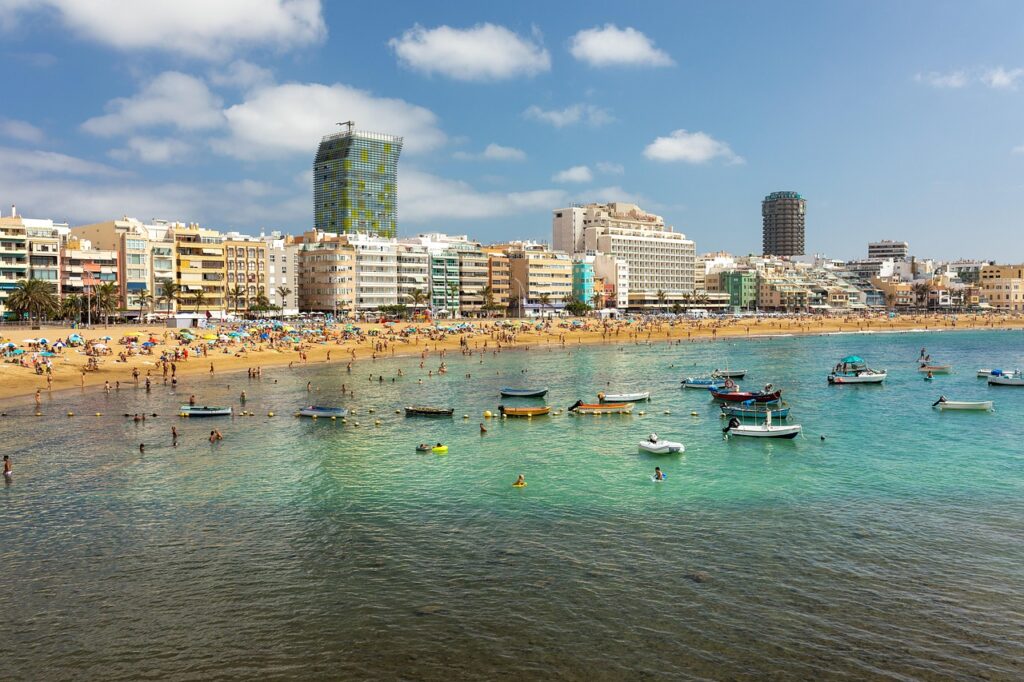
5. Las Palmas de Gran Canaria, Spain
- The Appeal: Part of Spain, but off the coast of Africa. Perfect weather year-round, a massive digital nomad community, and European infrastructure. Spain’s digital nomad visa offers a path.
- The Math: A European island life for $35,000 – $45,000/year.
- Consideration: Slightly higher cost than mainland SE Asia, but with European benefits.
Domestic (U.S.) Havens

6. Pittsburgh, Pennsylvania
- The Appeal: A hidden gem of the Rust Belt renaissance. World-class universities, hospitals, and cultural amenities at a steep discount. A strong sense of community.
- The Math: Housing is ~70% cheaper than coastal hubs. A couple’s budget of $45,000 feels like $75,000 elsewhere.
- Consideration: Winters are gray; the city is car-dependent in parts.

7. Greenville, South Carolina
- The Appeal: A model of Sun Belt growth with a charming, walkable downtown, access to nature, and a lower cost base than Atlanta or Nashville.
- The Math: No state income tax on Social Security and generous retirement income exemptions. Effective budget: $40,000 – $50,000 for a high quality of life.

8. Albuquerque, New Mexico
- The Appeal: Incredible climate (330 days of sun), unique culture, access to mountains, and a very low tax burden for retirees (Social Security is exempt, and there’s a retirement income deduction).
- The Math: Housing is a fraction of Western US costs. A $40,000 budget provides ample room for adventure.
- Consideration: Sprawl requires a car; economic opportunities are limited if you need Coast FIRE work.

9. Cincinnati, Ohio
- The Appeal: Surprisingly vibrant arts and food scene, major league sports, and beautiful historic neighborhoods. Exceptionally affordable housing stock.
- The Math: One of the best cost-to-quality ratios in the Midwest. A $40,000 budget allows for homeownership and frequent entertainment.
- Consideration: Economic growth is steady, not explosive.

10. Tulsa, Oklahoma (Remote Tulsa)
- The Appeal: Tulsa actively pays remote workers ($10,000 grant) to move there. Low taxes, a revitalizing downtown, and a growing community of young professionals. Click here to learn more
- The Math: The grant is a turbo-booster. A $35,000 – $45,000 budget is the norm, making early FI startlingly accessible.
The Execution Plan: How to Test Drive Geoarbitrage
Step 1: The “Virtual Audit”
Use detailed cost-of-living sites to build a mock budget. Don’t just look at aggregates; price out actual apartments on local rental sites. The two most popular are Expatistan and Numbeo.
Step 2: The Visa Deep Dive
Research the specific visa you qualify for (i.e., Nomad, Retirement, Investor). Blogs are a start, but consult an immigration specialist for the target country. Check out Nomad Visa for up-to-date visa information.
Step 3: The Healthcare Investigation
This is critical. For international moves, research local public/private systems and secure international private health insurance for the first year. Many digital nomads choose SafetyWing or Cigna Global for international health insurance quotes.
Step 4: The Trial Run
Rent, don’t buy. Commit to a 1-3 month exploratory stay in your top choice. Use Airbnb or local rental sites to immerse yourself. This step is non-negotiable.
Step 5: The Financial & Legal Setup
Open a local bank account, understand tax treaties, and ensure you can access your investments (consider a broker like Interactive Brokers). Hire a cross-border tax accountant.
The Trade-Offs: What You Gain and What You Leave Behind
What you stand to gain through geoarbitrage is transformative, extending far beyond the spreadsheet. You gain the profound financial breathing room that comes from drastically reducing your largest fixed expenses, turning what was once a tight monthly calculation into a comfortable margin of safety for your portfolio. This strategic move unlocks a life rich with adventure and daily cultural enrichment, where mundane errands become explorations and your worldview expands simply by living it.
Often, you also trade harsh winters or congested sprawl for a more pleasant and healthful climate. Ultimately, this confluence of lower costs and heightened living experience acts as a powerful accelerator for those on the path to FIRE, or a crucial fortifier for those in retirement, creating a more secure and sustainable withdrawal timeline that can withstand market volatility.
This powerful leverage, however, comes with a real and deeply personal cost. You leave behind the irreplaceable comfort of immediate proximity to family and lifelong friends, trading spontaneous Sunday dinners for scheduled video calls across time zones. You step away from a lifetime of familiar cultural cues—the unspoken norms, the humor, the convenience of knowing exactly how every system works. Sometimes, you even forsake certain consumer conveniences and instant gratifications taken for granted back home.
The true “cost” of geoarbitrage, therefore, is often emotional, not financial. It’s the quiet pang of missing a milestone, the energy required to navigate daily life in a new language, and the conscious effort to build a new community from the ground up. Success hinges not just on financial calculus, but on honestly weighing this emotional equation and determining if the freedom and growth on the horizon are worth the anchors you’ll need to lift.
Is Geoarbitrage For You?
It’s a strong fit if: You’re location-flexible, culturally curious, view change as an adventure, and want to maximize your financial options.
It’s likely not if: Close family ties are your absolute priority, you require specific medical care only available at home, or you are deeply uncomfortable outside your cultural comfort zone.
Geoarbitrage isn’t an escape. It’s a strategic redeployment of your life to a location where your currency—both dollars and time—holds greater power. In a world of financial uncertainty, it provides the ultimate control: the ability to make your existing portfolio support the life you want, not just the life you can afford.
Disclaimer: This article is for informational purposes only. It does not constitute legal, tax, financial, or immigration advice. Laws, visa programs, and costs change frequently. You must conduct your own due diligence and consult with qualified professionals (immigration lawyer, tax accountant, financial advisor) before making any international move. We may receive compensation through affiliate links in this article.
Leave a Reply